Europe’s Heat and Drought Are Now Disrupting Power, Shipping and Tourism
Record-low rivers are restricting freight on the Rhine and Danube, straining nuclear and hydropower systems and deepening the economic damage from wildfires across the continent.
Europe’s heatwave and drought are no longer only a public-health emergency.
They are disrupting cargo routes, forcing power-saving measures, cutting electricity generation and damaging tourism and agriculture from Germany to the Balkans and the Mediterranean.
The immediate pressure is visible on the continent’s two major commercial rivers.
The Rhine, a vital route for coal, chemicals, grain, minerals and fuel into Germany’s industrial heartland, has reached exceptionally low levels.
Cargo vessels can still move on some stretches, but many are carrying only a fraction of their normal load, pushing up freight costs and slowing deliveries to factories and distributors.
North Rhine-Westphalia’s transport minister, Oliver Krischer, has called for an emergency response as the low water threatens a river system central to Germany’s economy.
The disruption recalls the drought of 2018, when low Rhine levels imposed a measurable drag on German output.
This time the risk comes as Europe’s largest economy is already struggling with weak industrial momentum.
The Danube has become an even clearer illustration of how drought can move from transport into energy security.
Water levels from central Europe to the Black Sea have fallen sharply after prolonged heat, dry weather and low rainfall.
Navigation restrictions have forced cargo operators to reduce loads, while river tourism has been interrupted by route changes, cancellations and stranded vessels.
In late July, the Viking Ullur cruise ship ran aground near Vidin in Bulgaria after leaving the navigable channel in exceptionally low water.
All 186 passengers and 52 crew members were evacuated without reported injuries.
Across the Danube, cruise operators have had to use buses, alter itineraries or suspend calls at ports that would normally be at the height of their summer season.
The energy consequences are more serious still.
Hungary’s Paks nuclear plant, which normally provides close to half of the country’s electricity, has been operating at well below full capacity because the Danube is too low to supply normal cooling-water intake.
It has not been confirmed as permanently shut, but officials have warned that a complete suspension could become necessary if river levels continue to fall.
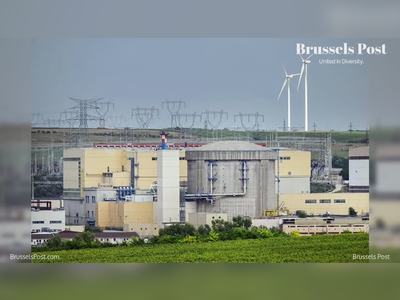
Romania has taken extraordinary action to protect its Cernavodă nuclear plant, where reduced water availability has already affected generation.
Authorities used a controlled explosion to remove submerged rock and improve the flow of Danube water toward the facility.
Serbia, meanwhile, has reported a steep drop in hydropower output, leaving the region more dependent on expensive electricity imports and conservation measures during peak summer demand.
The drought is also tightening pressure on agriculture and food prices.
Low water restricts the movement of grain and other bulk goods, while heat damages crops directly.
Olive producers, vineyards, vegetable growers and livestock farmers across southern Europe are facing losses from heat stress, fire damage, ash, water shortages and disrupted transport.
Those costs can move quickly through supply chains into supermarket prices.
Wildfires have added another layer of destruction.
France, Spain, Portugal, Greece and Romania have all faced major blazes, evacuations and damage to homes, farmland, forests and local businesses.
More than 500,000 hectares have burned across the most affected countries this season, while estimates of more than €3 billion in losses largely cover restoration of burned land rather than the broader damage to tourism, health, infrastructure and private businesses.
In France’s Gironde region, fires have disrupted tourism, agriculture and industrial activity, including temporary stoppages and evacuations involving aerospace and defence-related manufacturers.
In Greece, emergency services have been stretched by wind-driven fires and repeated evacuations.
Spain has also suffered severe rural fire damage as heat and drought hit crops and transport networks.
The financial impact will take longer to measure than the flames or the river gauges.
A European research assessment of the previous summer estimated that heatwaves, droughts and floods caused €43 billion in losses in 2025 and could produce €126 billion in cumulative losses by 2029. Those figures were projections, not a final bill for this year, and they did not include every form of damage, including wildfires and compound disasters.
What is already confirmed is that extreme heat is becoming a direct economic variable for Europe.
It reduces outdoor and industrial productivity, increases electricity demand for cooling, strains hospitals and emergency services, raises insurance exposure and turns water management into a question of national infrastructure.
The immediate test is whether rain arrives soon enough to restore river levels before freight restrictions and power cuts deepen the losses already spreading across the continent.
They are disrupting cargo routes, forcing power-saving measures, cutting electricity generation and damaging tourism and agriculture from Germany to the Balkans and the Mediterranean.
The immediate pressure is visible on the continent’s two major commercial rivers.
The Rhine, a vital route for coal, chemicals, grain, minerals and fuel into Germany’s industrial heartland, has reached exceptionally low levels.
Cargo vessels can still move on some stretches, but many are carrying only a fraction of their normal load, pushing up freight costs and slowing deliveries to factories and distributors.
North Rhine-Westphalia’s transport minister, Oliver Krischer, has called for an emergency response as the low water threatens a river system central to Germany’s economy.
The disruption recalls the drought of 2018, when low Rhine levels imposed a measurable drag on German output.
This time the risk comes as Europe’s largest economy is already struggling with weak industrial momentum.
The Danube has become an even clearer illustration of how drought can move from transport into energy security.
Water levels from central Europe to the Black Sea have fallen sharply after prolonged heat, dry weather and low rainfall.
Navigation restrictions have forced cargo operators to reduce loads, while river tourism has been interrupted by route changes, cancellations and stranded vessels.
In late July, the Viking Ullur cruise ship ran aground near Vidin in Bulgaria after leaving the navigable channel in exceptionally low water.
All 186 passengers and 52 crew members were evacuated without reported injuries.
Across the Danube, cruise operators have had to use buses, alter itineraries or suspend calls at ports that would normally be at the height of their summer season.
The energy consequences are more serious still.
Hungary’s Paks nuclear plant, which normally provides close to half of the country’s electricity, has been operating at well below full capacity because the Danube is too low to supply normal cooling-water intake.
It has not been confirmed as permanently shut, but officials have warned that a complete suspension could become necessary if river levels continue to fall.
Romania has taken extraordinary action to protect its Cernavodă nuclear plant, where reduced water availability has already affected generation.
Authorities used a controlled explosion to remove submerged rock and improve the flow of Danube water toward the facility.
Serbia, meanwhile, has reported a steep drop in hydropower output, leaving the region more dependent on expensive electricity imports and conservation measures during peak summer demand.
The drought is also tightening pressure on agriculture and food prices.
Low water restricts the movement of grain and other bulk goods, while heat damages crops directly.
Olive producers, vineyards, vegetable growers and livestock farmers across southern Europe are facing losses from heat stress, fire damage, ash, water shortages and disrupted transport.
Those costs can move quickly through supply chains into supermarket prices.
Wildfires have added another layer of destruction.
France, Spain, Portugal, Greece and Romania have all faced major blazes, evacuations and damage to homes, farmland, forests and local businesses.
More than 500,000 hectares have burned across the most affected countries this season, while estimates of more than €3 billion in losses largely cover restoration of burned land rather than the broader damage to tourism, health, infrastructure and private businesses.
In France’s Gironde region, fires have disrupted tourism, agriculture and industrial activity, including temporary stoppages and evacuations involving aerospace and defence-related manufacturers.
In Greece, emergency services have been stretched by wind-driven fires and repeated evacuations.
Spain has also suffered severe rural fire damage as heat and drought hit crops and transport networks.
The financial impact will take longer to measure than the flames or the river gauges.
A European research assessment of the previous summer estimated that heatwaves, droughts and floods caused €43 billion in losses in 2025 and could produce €126 billion in cumulative losses by 2029. Those figures were projections, not a final bill for this year, and they did not include every form of damage, including wildfires and compound disasters.
What is already confirmed is that extreme heat is becoming a direct economic variable for Europe.
It reduces outdoor and industrial productivity, increases electricity demand for cooling, strains hospitals and emergency services, raises insurance exposure and turns water management into a question of national infrastructure.
The immediate test is whether rain arrives soon enough to restore river levels before freight restrictions and power cuts deepen the losses already spreading across the continent.
AI Disclaimer: An advanced artificial intelligence (AI) system generated the content of this page on its own. This innovative technology conducts extensive research from a variety of reliable sources, performs rigorous fact-checking and verification, cleans up and balances biased or manipulated content, and presents a minimal factual summary that is just enough yet essential for you to function as an informed and educated citizen. Please keep in mind, however, that this system is an evolving technology, and as a result, the article may contain accidental inaccuracies or errors. We urge you to help us improve our site by reporting any inaccuracies you find using the "Contact Us" link at the bottom of this page. Your helpful feedback helps us improve our system and deliver more precise content. When you find an article of interest here, please look for the full and extensive coverage of this topic in traditional news sources, as they are written by professional journalists that we try to support, not replace. We appreciate your understanding and assistance.