France Calls on EU to Deploy Powerful Trade Retaliation as Trump Announces Greenland-Linked Tariffs
Paris urges the European Union to activate its strongest trade defence mechanism in response to tariff threats tied to U.S. ambitions in Greenland
French President Emmanuel Macron has urged the European Union to activate the bloc’s most potent trade defence mechanism after U.S. President Donald Trump announced escalating tariffs on several European nations linked to a dispute over Greenland.
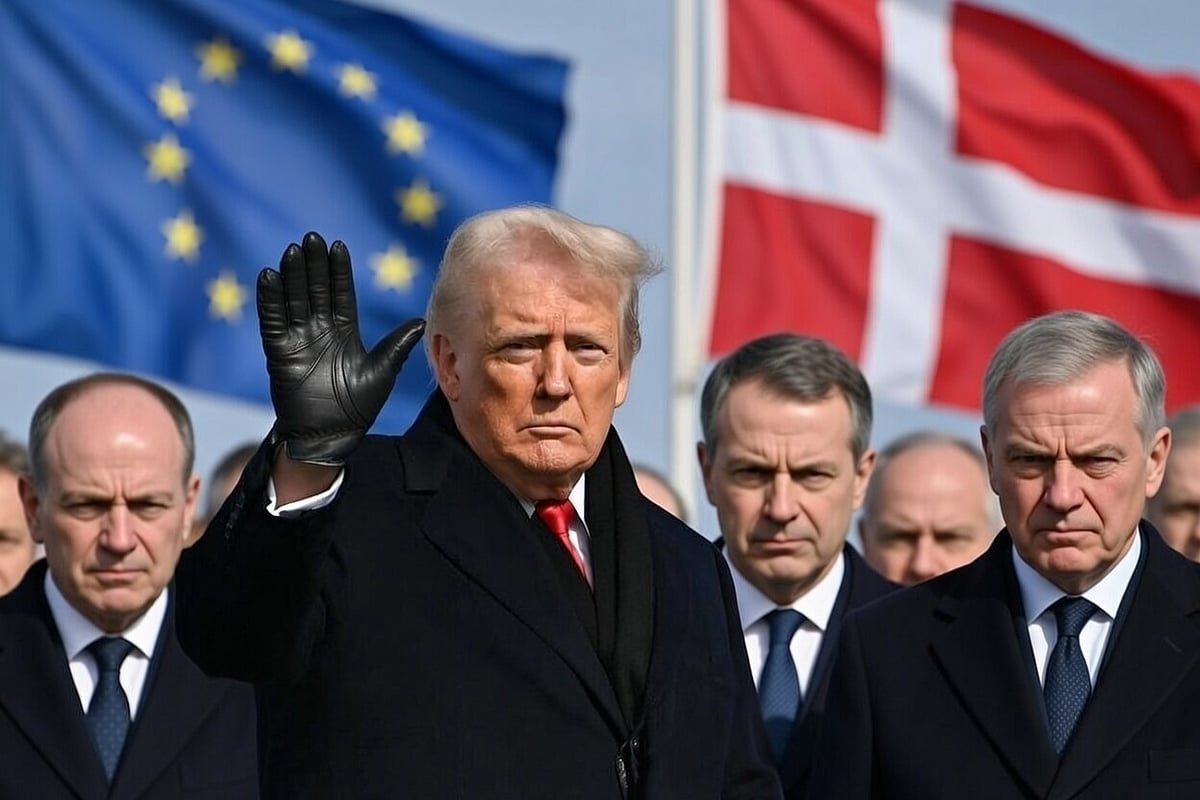
Mr Trump declared on January 17 that goods from Denmark, Norway, Sweden, France, Germany, the United Kingdom, the Netherlands and Finland would face a ten per cent import levy from February 1, rising to twenty-five per cent by June unless progress is made on U.S. demands related to Greenland.
The threatened tariffs have prompted a forceful response from European leaders, with Paris describing the move as an unacceptable use of economic pressure against allies cooperating within the North Atlantic Treaty Organization and stressing that sovereignty and regional security concerns in the Arctic are non-negotiable.
In response, Mr Macron signalled that France would formally request the European Commission and member states to trigger the European Union’s Anti-Coercion Instrument — a powerful, never-before-used tool designed to allow the bloc to impose counter-measures, including market access restrictions, retaliatory tariffs and limits on public procurement or foreign investment, against economic coercion by third countries.
The instrument, adopted in 2023, could empower the EU to respond decisively if Mr Trump’s tariff threats materialise, though its activation requires qualified majority support among member states and is expected to be subject to intense deliberation.
European Union ambassadors convened in Brussels to discuss the next steps in response to the emerging crisis as diplomats sought to balance unity with caution, amid discussions of reactivating a previously agreed package of €93 billion in potential retaliatory tariffs targeting U.S. exports once its temporary suspension expires in early February.
European capitals issued a joint statement emphasising that their recent deployment of troops to Greenland for a defence exercise posed no threat to the United States and reiterated their commitment to transatlantic cooperation, while warning that unilateral trade penalties risk damaging long-standing alliances.
The tensions have also stalled progress on the proposed EU-U.S. trade agreement that was expected to lower tariffs and deepen economic ties, with European lawmakers indicating that ratification cannot proceed amid the current dispute.
Mr Macron’s call for the Anti-Coercion Instrument reflects a broader determination among some EU leaders to assert economic sovereignty and deter what they see as unilateral coercive tactics, even as deliberations continue over the appropriate timing and scope of any retaliatory measures.
Mr Trump declared on January 17 that goods from Denmark, Norway, Sweden, France, Germany, the United Kingdom, the Netherlands and Finland would face a ten per cent import levy from February 1, rising to twenty-five per cent by June unless progress is made on U.S. demands related to Greenland.
The threatened tariffs have prompted a forceful response from European leaders, with Paris describing the move as an unacceptable use of economic pressure against allies cooperating within the North Atlantic Treaty Organization and stressing that sovereignty and regional security concerns in the Arctic are non-negotiable.
In response, Mr Macron signalled that France would formally request the European Commission and member states to trigger the European Union’s Anti-Coercion Instrument — a powerful, never-before-used tool designed to allow the bloc to impose counter-measures, including market access restrictions, retaliatory tariffs and limits on public procurement or foreign investment, against economic coercion by third countries.
The instrument, adopted in 2023, could empower the EU to respond decisively if Mr Trump’s tariff threats materialise, though its activation requires qualified majority support among member states and is expected to be subject to intense deliberation.
European Union ambassadors convened in Brussels to discuss the next steps in response to the emerging crisis as diplomats sought to balance unity with caution, amid discussions of reactivating a previously agreed package of €93 billion in potential retaliatory tariffs targeting U.S. exports once its temporary suspension expires in early February.
European capitals issued a joint statement emphasising that their recent deployment of troops to Greenland for a defence exercise posed no threat to the United States and reiterated their commitment to transatlantic cooperation, while warning that unilateral trade penalties risk damaging long-standing alliances.
The tensions have also stalled progress on the proposed EU-U.S. trade agreement that was expected to lower tariffs and deepen economic ties, with European lawmakers indicating that ratification cannot proceed amid the current dispute.
Mr Macron’s call for the Anti-Coercion Instrument reflects a broader determination among some EU leaders to assert economic sovereignty and deter what they see as unilateral coercive tactics, even as deliberations continue over the appropriate timing and scope of any retaliatory measures.
AI Disclaimer: An advanced artificial intelligence (AI) system generated the content of this page on its own. This innovative technology conducts extensive research from a variety of reliable sources, performs rigorous fact-checking and verification, cleans up and balances biased or manipulated content, and presents a minimal factual summary that is just enough yet essential for you to function as an informed and educated citizen. Please keep in mind, however, that this system is an evolving technology, and as a result, the article may contain accidental inaccuracies or errors. We urge you to help us improve our site by reporting any inaccuracies you find using the "Contact Us" link at the bottom of this page. Your helpful feedback helps us improve our system and deliver more precise content. When you find an article of interest here, please look for the full and extensive coverage of this topic in traditional news sources, as they are written by professional journalists that we try to support, not replace. We appreciate your understanding and assistance.