
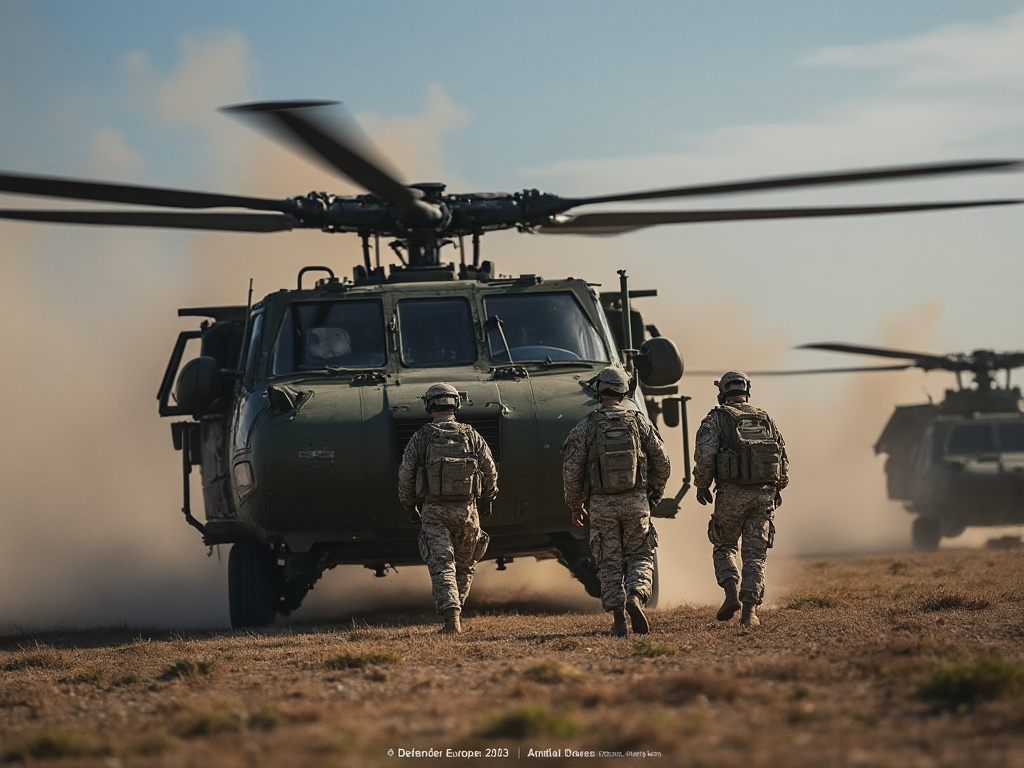
NATO Conducts Large-Scale Military Exercises Amid Rising Geopolitical Tensions
NATO's recent military maneuvers involve over 30,000 troops and aim to enhance readiness in the face of regional threats.
NATO has initiated a series of large-scale military exercises known as 'Defender Europe 2023,' involving more than 30,000 troops from various member countries.
These exercises are taking place across multiple locations in Europe, including Eastern European nations and the Black Sea region.
The goal of these drills is to enhance the alliance's readiness and responsiveness to potential threats in the backdrop of increasing geopolitical tensions, particularly due to the ongoing conflict in Ukraine.
The participating countries include the United States, the United Kingdom, and various NATO allies from Eastern and Western Europe.
The exercises are designed not only to test the interoperability of allied forces but also to demonstrate NATO’s commitment to collective defense as outlined in Article 5 of the NATO Treaty.
As NATO continues to bolster its defense posture, the exercises include various components such as land, air, and maritime operations.
These comprehensive maneuvers reflect the alliance's strategic shift to maintain security in the face of evolving threats, including those posed by Russia.
The drills are expected to simulate a range of scenarios, from conventional warfare to crisis response and humanitarian assistance.
In recent months, NATO has seen an increase in defense spending among its member states, with many countries pledging to meet or exceed the alliance's target of spending 2% of their GDP on defense.
This increased investment is part of a broader strategy to ensure that NATO is prepared to defend its members against any potential aggression.
The backdrop of these exercises also includes diplomatic efforts between NATO members and leaders from partner nations.
Discussions have been focused on security cooperation, defense capabilities, and the importance of maintaining a unified stance against threats to regional stability.
The exercises have drawn attention from global observers and military analysts, who view them as a demonstration of solidarity among NATO members in an increasingly challenging security environment.
The alliance remains committed to addressing its members' security concerns while balancing the need for diplomatic engagement in global affairs.
These exercises are taking place across multiple locations in Europe, including Eastern European nations and the Black Sea region.
The goal of these drills is to enhance the alliance's readiness and responsiveness to potential threats in the backdrop of increasing geopolitical tensions, particularly due to the ongoing conflict in Ukraine.
The participating countries include the United States, the United Kingdom, and various NATO allies from Eastern and Western Europe.
The exercises are designed not only to test the interoperability of allied forces but also to demonstrate NATO’s commitment to collective defense as outlined in Article 5 of the NATO Treaty.
As NATO continues to bolster its defense posture, the exercises include various components such as land, air, and maritime operations.
These comprehensive maneuvers reflect the alliance's strategic shift to maintain security in the face of evolving threats, including those posed by Russia.
The drills are expected to simulate a range of scenarios, from conventional warfare to crisis response and humanitarian assistance.
In recent months, NATO has seen an increase in defense spending among its member states, with many countries pledging to meet or exceed the alliance's target of spending 2% of their GDP on defense.
This increased investment is part of a broader strategy to ensure that NATO is prepared to defend its members against any potential aggression.
The backdrop of these exercises also includes diplomatic efforts between NATO members and leaders from partner nations.
Discussions have been focused on security cooperation, defense capabilities, and the importance of maintaining a unified stance against threats to regional stability.
The exercises have drawn attention from global observers and military analysts, who view them as a demonstration of solidarity among NATO members in an increasingly challenging security environment.
The alliance remains committed to addressing its members' security concerns while balancing the need for diplomatic engagement in global affairs.
AI Disclaimer: An advanced artificial intelligence (AI) system generated the content of this page on its own. This innovative technology conducts extensive research from a variety of reliable sources, performs rigorous fact-checking and verification, cleans up and balances biased or manipulated content, and presents a minimal factual summary that is just enough yet essential for you to function as an informed and educated citizen. Please keep in mind, however, that this system is an evolving technology, and as a result, the article may contain accidental inaccuracies or errors. We urge you to help us improve our site by reporting any inaccuracies you find using the "Contact Us" link at the bottom of this page. Your helpful feedback helps us improve our system and deliver more precise content. When you find an article of interest here, please look for the full and extensive coverage of this topic in traditional news sources, as they are written by professional journalists that we try to support, not replace. We appreciate your understanding and assistance.