
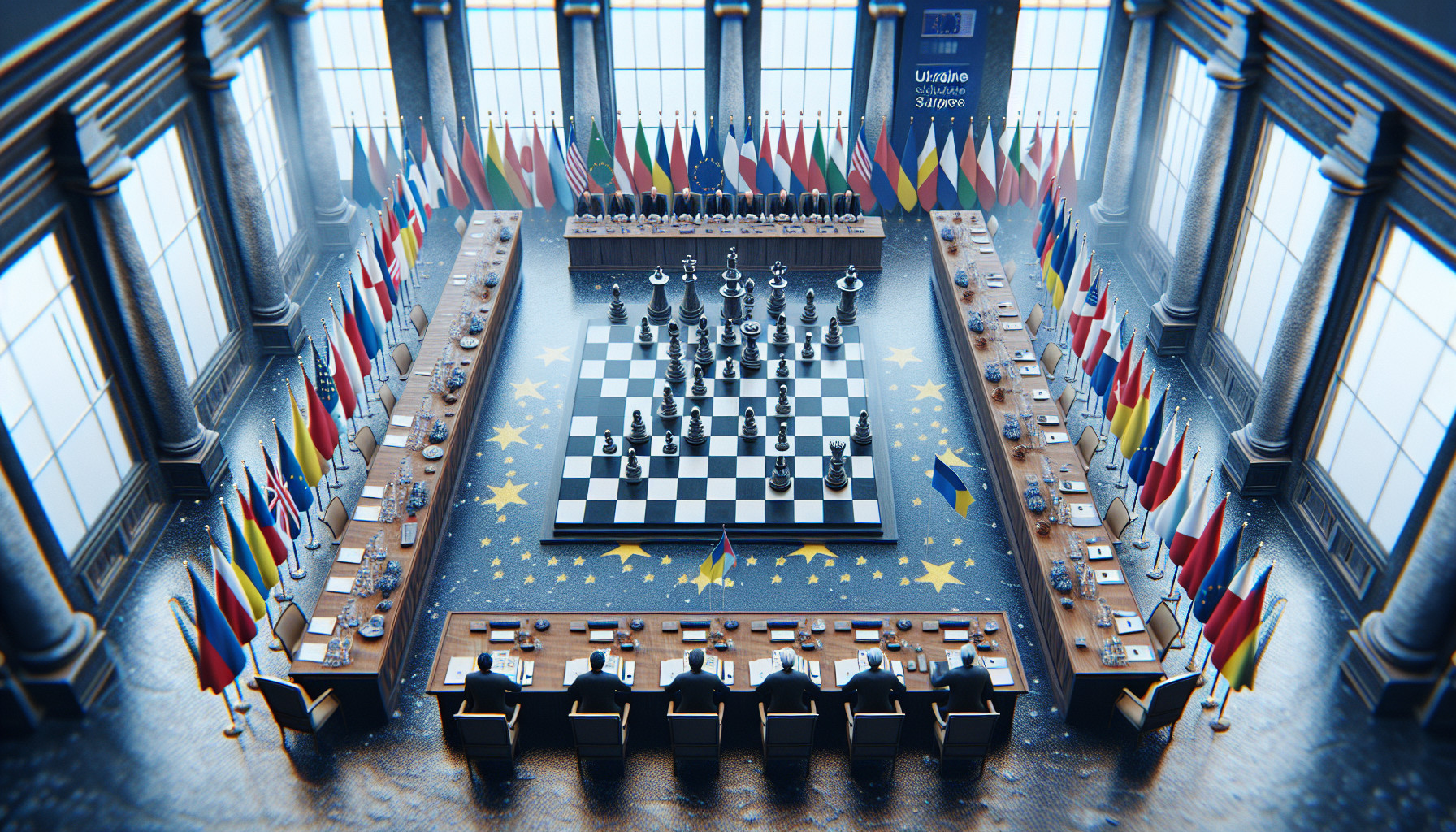
European Council Summit Addresses Ukraine Support Amidst Strategic Tensions
Key EU leaders convene to discuss military support for Ukraine and defense autonomy in the face of US pressures.
Brussels – An extraordinary session of the European Council is set for March 6, following weeks of intensive discussions among EU leaders regarding the bloc's military and strategic response to the ongoing situation in Ukraine.
This summit is particularly significant as it arrives amid apprehensions concerning the future of transatlantic relations with the United States and its influence on EU decision-making regarding defense and support for Kyiv.
Recent diplomatic engagements have included meetings at the Elysee Palace and London, alongside visits to Kyiv by senior European officials.
The upcoming summit will test the unity of EU member states in their approach to military aid for Ukraine, especially in light of the evolving political landscape in the United States, where Donald Trump's stance on Ukraine remains a contentious subject.
While a senior EU official described the summit as potentially a stepping stone rather than a conclusive event, there is an intense focus on demonstrating a unified front on two critical pillars: European defense capabilities and support for Ukraine.
The Rearm Europe plan, coupled with a letter from European Commission President Ursula von der Leyen outlining priorities, forms the basis for consensus among member states, though significant divisions appear to be emerging.
Hungary and Slovakia have publicly stated their opposition to further military support for Ukraine ahead of the summit's discussions.
Hungarian Prime Minister Viktor Orban has explicitly outlined Hungary's resistance to principles proposed in the draft summit conclusions.
To navigate these challenges, leaders will discuss the situation at a closed meeting where national diplomatic teams will not be present, underscoring the sensitive nature of the topic.
The European Council is anticipated to reiterate that negotiations regarding Ukraine and European security must involve both Ukraine and European stakeholders.
It asserts that any ceasefire must contribute to a comprehensive peace agreement accompanied by solid security guarantees for Ukraine, emphasizing the need for the respect of the nation’s independence and territorial integrity.
Member states have reached a preliminary consensus regarding strengthening Ukrainian defense capabilities, with at least 25 countries agreeing on a cooperative approach to provide military, financial, and technological support.
However, specifics regarding the nature and extent of security guarantees remain under discussion, particularly avoiding a repeat of the unsuccessful Minsk agreements.
The summit is expected to feature participation from Ukrainian President Volodymyr Zelensky, who will either attend in person or connect via video link, further emphasizing the importance of the international community's commitment to Ukraine's defense.
Some EU officials stress the necessity of maintaining cohesion within the Western camp, suggesting that the absence of the United States from negotiations would be detrimental to regional stability and security.
In a separate discussion, EU leaders may indicate their willingness to contribute military resources to support peace efforts in Ukraine.
The possibility of forming a 'coalition of the willing'—which could comprise select Western partners while excluding more hesitant EU states—is also on the agenda.
This coalition could facilitate a more significant role for the EU in future peacekeeping or enforcement missions.
Diplomatic discussions are expected to weigh the significance of von der Leyen’s proposals for enhancing EU defense autonomy.
These include recommendations for adjustments to the Stability and Growth Pact to allow for increased defense spending, establishment of a loan facility for joint military procurement, and potential redirection of cohesion funds towards military enhancements.
The upcoming Defense White Paper to be presented by the European Commission on March 19 will further outline these proposals, detailing how member states can align their defense expenditures while maintaining economic stability.
The current Polish rotating presidency of the Council has called a preliminary meeting of diplomatic representatives to set the stage for final discussions during the summit, signaling the high stakes involved in the upcoming dialogue.
This summit is particularly significant as it arrives amid apprehensions concerning the future of transatlantic relations with the United States and its influence on EU decision-making regarding defense and support for Kyiv.
Recent diplomatic engagements have included meetings at the Elysee Palace and London, alongside visits to Kyiv by senior European officials.
The upcoming summit will test the unity of EU member states in their approach to military aid for Ukraine, especially in light of the evolving political landscape in the United States, where Donald Trump's stance on Ukraine remains a contentious subject.
While a senior EU official described the summit as potentially a stepping stone rather than a conclusive event, there is an intense focus on demonstrating a unified front on two critical pillars: European defense capabilities and support for Ukraine.
The Rearm Europe plan, coupled with a letter from European Commission President Ursula von der Leyen outlining priorities, forms the basis for consensus among member states, though significant divisions appear to be emerging.
Hungary and Slovakia have publicly stated their opposition to further military support for Ukraine ahead of the summit's discussions.
Hungarian Prime Minister Viktor Orban has explicitly outlined Hungary's resistance to principles proposed in the draft summit conclusions.
To navigate these challenges, leaders will discuss the situation at a closed meeting where national diplomatic teams will not be present, underscoring the sensitive nature of the topic.
The European Council is anticipated to reiterate that negotiations regarding Ukraine and European security must involve both Ukraine and European stakeholders.
It asserts that any ceasefire must contribute to a comprehensive peace agreement accompanied by solid security guarantees for Ukraine, emphasizing the need for the respect of the nation’s independence and territorial integrity.
Member states have reached a preliminary consensus regarding strengthening Ukrainian defense capabilities, with at least 25 countries agreeing on a cooperative approach to provide military, financial, and technological support.
However, specifics regarding the nature and extent of security guarantees remain under discussion, particularly avoiding a repeat of the unsuccessful Minsk agreements.
The summit is expected to feature participation from Ukrainian President Volodymyr Zelensky, who will either attend in person or connect via video link, further emphasizing the importance of the international community's commitment to Ukraine's defense.
Some EU officials stress the necessity of maintaining cohesion within the Western camp, suggesting that the absence of the United States from negotiations would be detrimental to regional stability and security.
In a separate discussion, EU leaders may indicate their willingness to contribute military resources to support peace efforts in Ukraine.
The possibility of forming a 'coalition of the willing'—which could comprise select Western partners while excluding more hesitant EU states—is also on the agenda.
This coalition could facilitate a more significant role for the EU in future peacekeeping or enforcement missions.
Diplomatic discussions are expected to weigh the significance of von der Leyen’s proposals for enhancing EU defense autonomy.
These include recommendations for adjustments to the Stability and Growth Pact to allow for increased defense spending, establishment of a loan facility for joint military procurement, and potential redirection of cohesion funds towards military enhancements.
The upcoming Defense White Paper to be presented by the European Commission on March 19 will further outline these proposals, detailing how member states can align their defense expenditures while maintaining economic stability.
The current Polish rotating presidency of the Council has called a preliminary meeting of diplomatic representatives to set the stage for final discussions during the summit, signaling the high stakes involved in the upcoming dialogue.
AI Disclaimer: An advanced artificial intelligence (AI) system generated the content of this page on its own. This innovative technology conducts extensive research from a variety of reliable sources, performs rigorous fact-checking and verification, cleans up and balances biased or manipulated content, and presents a minimal factual summary that is just enough yet essential for you to function as an informed and educated citizen. Please keep in mind, however, that this system is an evolving technology, and as a result, the article may contain accidental inaccuracies or errors. We urge you to help us improve our site by reporting any inaccuracies you find using the "Contact Us" link at the bottom of this page. Your helpful feedback helps us improve our system and deliver more precise content. When you find an article of interest here, please look for the full and extensive coverage of this topic in traditional news sources, as they are written by professional journalists that we try to support, not replace. We appreciate your understanding and assistance.